Tags: pipette tip Manual pipette Electric pipette BUNSEN pipette
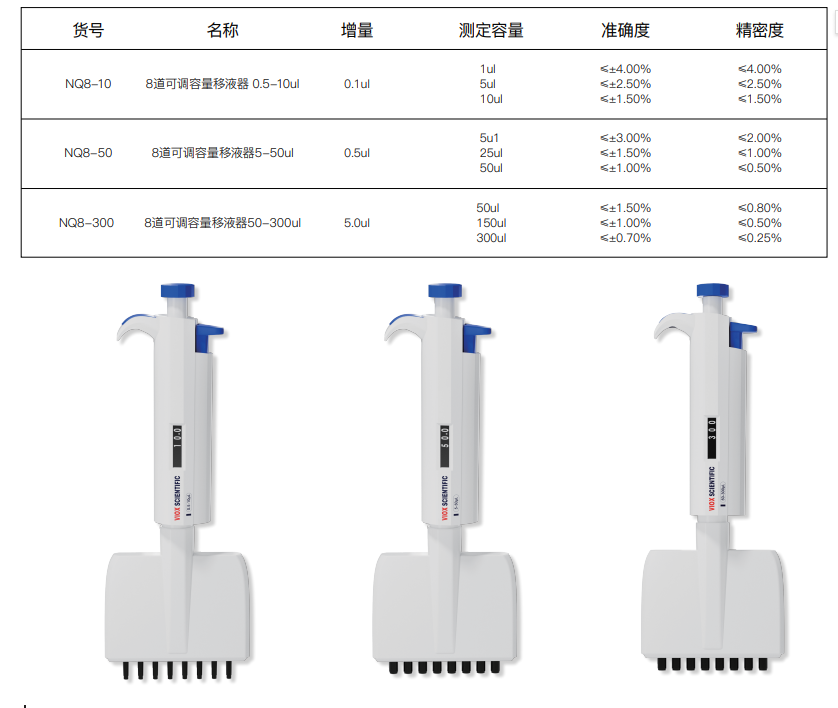
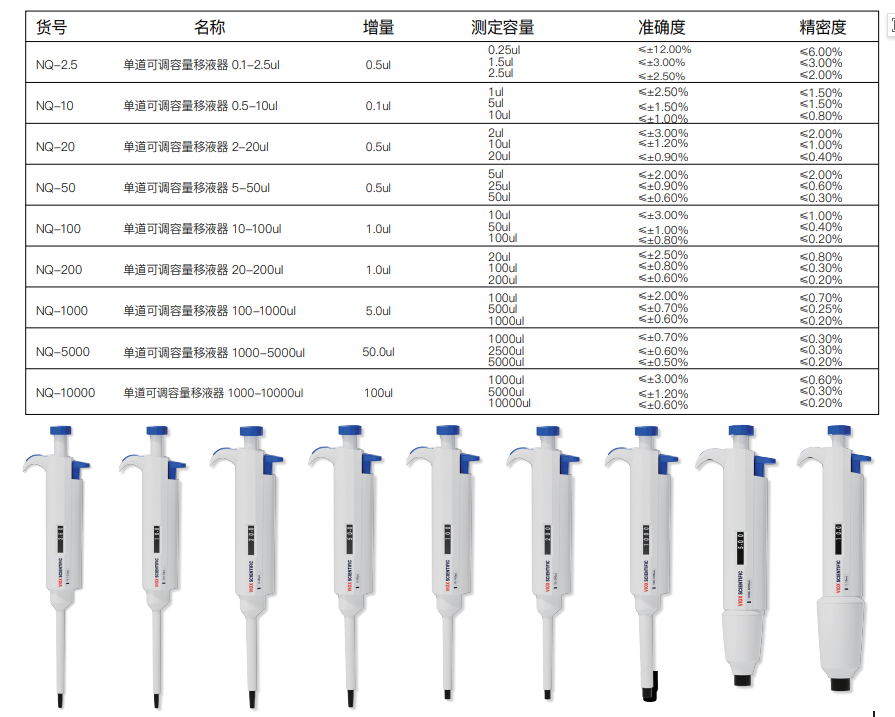
pipette is a new type of laboratory instrument designed for dispensing small volumes of liquid; it is used in biochemical, molecular biological and biological experiments. pipette is a volumetric measuring instrument, available in two types: quantitative pipette and adjustable pipette. They are available in single-head and multi-head configurations. pipette There are two main types: manual pipette and electronic pipette.
I. Standardising Practical Operations
Suitable liquids: water, buffer solutions, diluents and aqueous solutions of strong acids and strong alkalis.
1) Press the lever down and insert it vertically to the level marked in millimetres.
2) Release the control button slowly; otherwise, if liquid enters pipette tip at excessive speed, it may be sucked back into pipette, reducing the internal suction volume.
3) When the liquid is clinging to the sides of the container and at a certain angle, first press the button to the first setting; pause for 1 second, then, once the remaining liquid has pooled, press the button to the second setting to squeeze out all the remaining liquid.
II. Transferring viscous or volatile liquids
When pipetting viscous or volatile liquids, significant volume discrepancies can easily occur. To improve pipetting performance, the following methods are recommended:
1) Before pipetting, pre-wet the interior of the pipette tip with liquid; that is, repeatedly aspirate and dispense the liquid several times to pre-wet the pipette tip. When aspirating or dispensing liquid, allow it to remain in the pipette for a few minutes. Particularly when handling large volumes of liquid (e.g. 1000–1), it is recommended to pre-wet the pipette tip before aspiration.
2) Use the reverse pipetting method: when aspirating, press the control button to the second position and gradually release it; when dispensing, press the control button to the second position, leaving a small amount of liquid remaining in the pipette tip.
III. Common Operational Errors
1) When aspirating, pipette tilts, resulting in inaccurate pipetting (the pipette should be held vertically, and the liquid should be drawn up and dispensed slowly).
2) When fitting pipette tip, excessive force was applied, resulting in pipette tip becoming impossible to remove (do not apply excessive force; select a pipette tip that is compatible with pipette).
3) Place pipette containing residue of liquid pipette tip (pipette should be hung on the pipette rack).
4) Use a pipette with a large number of chambers to remove small-volume samples (a pipette suitable for the measurement range should be selected).
5) Immediately switch to the second suction setting (this should be carried out in accordance with the specified procedure).
Note: The above is for reference only and does not constitute actual data; experiments must be carried out in strict accordance with the instructions or in consultation with a technical instructor.
Note: The information on the scientific research products above is for reference only!
Related BUNSEN products
Browse the full product range, or request a sample or quotation.
Leave a Reply