Tag: Cryovial Tube Three in One Cryovial Tube Cryovial Tube
BUNSEN For thawing procedures involving cells cryovial, the principle of ‘slow freezing and rapid thawing’ must be followed, ensuring that cell viability is maintained and operational safety is prioritised throughout the process. The specific standard procedure is as follows:
thawing Pre-safety preparations
Wear a laboratory coat and cold-resistant cotton gloves at all times; it is recommended that you wear safety goggles or a face shield to avoid biological hazards caused by frostbite from liquid nitrogen or by cryovial bursting.
Preheat culture medium to 37°C in advance, and have 70 per cent alcohol, sterile, centrifuge tube, pipette and other sterile consumables, and complete the disinfection preparations in advance within the laminar flow cabinet.
After removing cryovial from the liquid nitrogen tank, allow it to stand in the air for 3–5 seconds to ensure that any trace amounts of liquid nitrogen that may have seeped into the tube have fully evaporated; this prevents the tube from bursting due to the rapid sublimation of liquid nitrogen upon direct contact with water.
Quick thawing Operations
Place cryovial rapidly into a water bath maintained at 37°C, shaking gently and continuously to ensure it melts within 1–2 minutes; remove it as soon as only a very small number of ice crystals remain. Take great care to avoid slow thawing, which can cause secondary ice crystal formation within the cells and damage their viability.
Strictly control the water level in the water bath to ensure that the water does not rise above cryovial the rim of the lid, in order to prevent water from seeping into the tubes and causing specimen cell contamination.
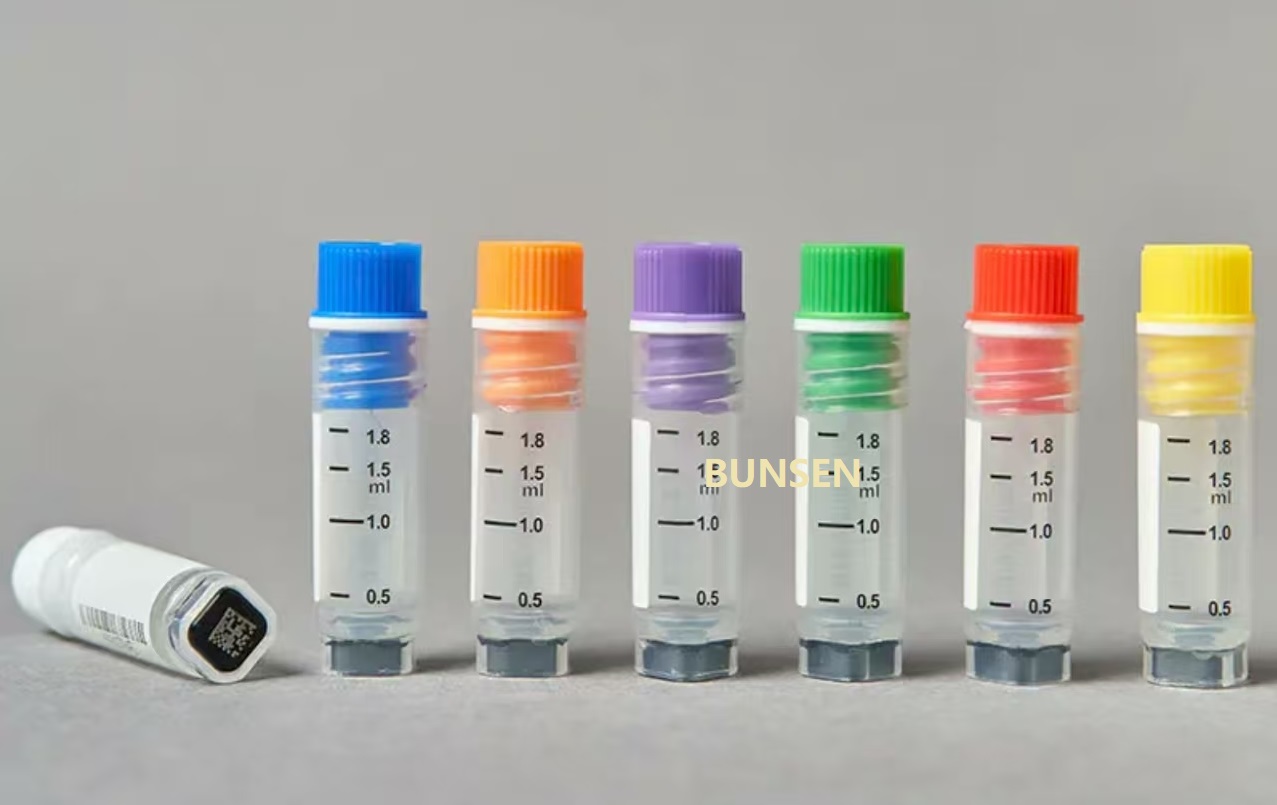
sterile Transfer and cell recovery
thawing Once completed, immediately wipe the outer surface of cryovial with 70 per cent alcohol and transfer it to a cleanbench to carry out the subsequent steps.
Gently unscrew tube cap and transfer the cell suspension to a tube pre-filled with a small amount of sterile centrifuge tube that has been preheated to culture medium:
If the DMSO concentration in the cryopreservation solution is 5 per cent, there is no need for centrifugation; the cells may be inoculated directly after diluting with 15 ml of culture medium, as DMSO at this concentration exhibits no significant cytotoxicity;
For DMSO-sensitive cell lines, use the low-speed centrifugation method: 125–500 g centrifugation for 5–10 minutes; discard the supernatant containing the cryoprotectant and gently resuspend the cell pellet in 1–2 ml of fresh, pre-warmed culture medium solution.
Post-resuscitation care and follow-up observation
Transfer the resuspended cell suspension to a pre-prepared culture vessel, mix thoroughly, and place it in an incubator at 37 °C and 5 % CO₂ for incubation. Avoid moving the culture vessel as much as possible within 12 hours of inoculation to minimise disruption to cell attachment.
Key tips to avoid pitfalls
cryovial Daily storage Must be stored in the vapour phase of liquid nitrogen or in a -80°C freezer; direct immersion in the liquid phase of liquid nitrogen is strictly prohibited, in order to prevent, at source, the risk of liquid nitrogen seeping into the tubing and causing it to burst during thawing.
The volume of cryopreserved material specimen must not exceed cryovial of the rated working volume, to prevent ice plugs from forming inside the tubes during the freezing process, which could cause high pressure to damage the tubes and pose a safety hazard.
Note: The information on the scientific research products above is for reference only!
Related BUNSEN products
- Cryovials & Sample Tubes
- Tabletop Centrifuge & Centrifuge Tubes
- Product Center — all BUNSEN lab consumables & instruments
Browse the full product range, or request a sample or quotation.
Leave a Reply