Most centrifuge tube problems are not manufacturing faults. They are selection faults: a tube that did not fit the rotor, a cap that did not hold a volatile solvent, or a standard tube pushed past the speed of a high-speed protocol. This guide sets out the four decisions that actually matter — capacity, rotor fit, material and seal — and the order to take them in.
1. Capacity: match the tube to the sample and the step
Capacity follows the sample volume and what the step is meant to achieve. Pick the smallest tube that holds the volume comfortably; a tube filled to the shoulder is hard to cap cleanly and easy to spill during decanting.
| Capacity | Typical use | Why this size |
|---|---|---|
| 0.2 mL | PCR reactions | Fits thermal block formats; minimal dead volume around a small reaction. |
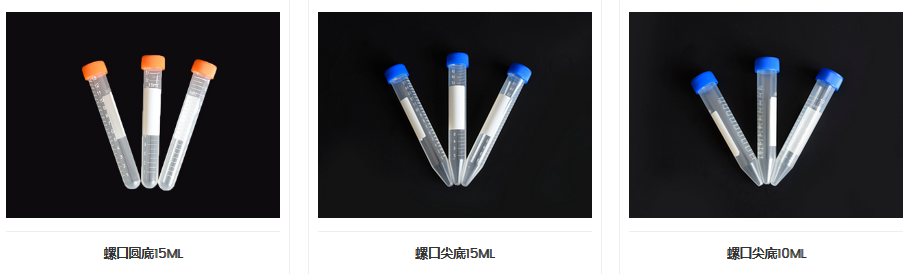
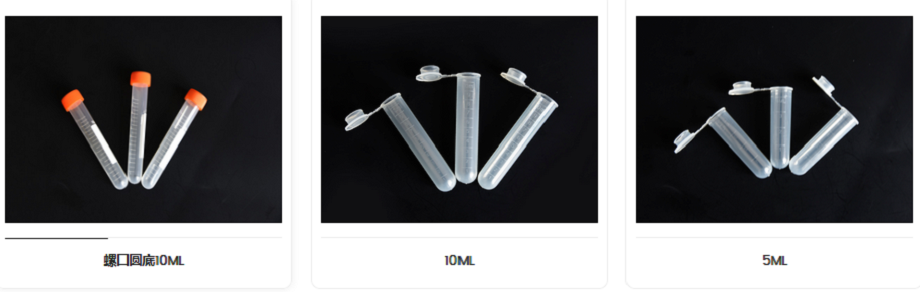
| 0.5 – 2 mL | Micro-volume nucleic acid extraction, protein work, precipitation | The pointed base concentrates a small pellet at one point, which makes the supernatant easy to remove by pipette. |
| 5 – 10 mL | Small volumes of culture medium; aliquoting standard reagents | A middle size that balances handling convenience against throughput. |
| 15 mL | Cell culture, serum separation | The conical base encourages cells to form a compact pellet at a defined spot, and the format suits standard benchtop rotors. |
| 50 mL | Larger sample volumes, protein purification, tissue homogenisation | Reinforced walls take higher speed work, and most models stand upright on the bench without a rack. |
| 400 mL – 1 L | Floor-standing centrifuges; bulk clarification; batch separation | Requires the matching rotor and the dedicated adapter for that rotor. |
2. Rotor fit: the check that prevents most breakage
A tube must sit in the rotor exactly as the rotor was designed for it. Three things go wrong here, and all three end with a cracked tube or a spill in the bucket:
- Diameter and length. The tube has to seat in the bore without wobble, without hanging on the rim and without being forced in. A tube that is too long or too short sits badly and can fail at speed.
- No improvised adapters. Use the adapter specified for that rotor, or do not run the tube. A hand-made shim changes the load path and is not a substitute.
- Base shape. A pointed-bottom tube needs a rotor designed for pointed-bottom tubes. A flat-bottom upright tube is a bench container — many rotors will not accept it at all.
3. Speed and RCF: never assume a tube will hold
Work to the rating printed for that specific tube, not to a general figure for the material. Standard polypropylene tubes cover the great majority of benchtop protocols; a step above roughly 15,000 ×g needs a model explicitly rated for that speed. Fifty-millilitre tubes with reinforced walls are used for spins up to about 12,000 ×g. If a protocol demands more than the tube is rated for, the answer is a different tube, not a lower fill level.
4. Seal: screw cap or push-on
The cap decides whether a volatile solvent stays in the tube and whether a sample survives months in the freezer.
| Seal | Best for | Limit |
|---|---|---|
| Screw cap with O-ring | Volatile reagents, long-term storage | Best protection against evaporation and leakage; slightly slower to open and close. |
| Push-on cap | Fast aliquoting, short routine spins | Weaker seal; not for volatiles or storage. |
5. Base shape
| Base | Use it for | Constraint |
|---|---|---|
| Pointed (conical) | Pellet recovery from cell culture and precipitation | Only with rotors designed for pointed-bottom tubes. |
| Round | General work | Compatible with most standard rotors. |
| Flat-bottom upright | Bench storage and handling | Not accepted by every rotor; not a spinning format. |
6. Material: what the grade actually changes
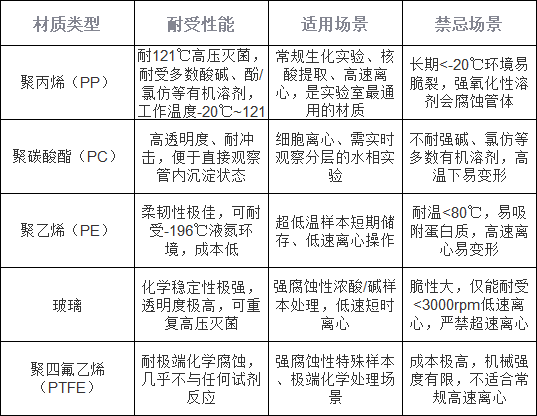
Heat resistance, chemical resistance and mechanical strength vary between grades, and the three do not move together. The chart below compares them across the materials BUNSEN supplies. In practice the choice is driven by two questions: does the sample contain a solvent that attacks the polymer, and does the tube have to be autoclaved or frozen? Polypropylene answers both for most work — it resists acids, alkalis, alcohols, DMSO and most other organic solvents, and it tolerates both -80 °C storage and 121 °C autoclaving.
7. What actually wears a tube out
Tubes rarely fail on the first use. They fail after repeated autoclaving has clouded the wall, after a solvent has softened it, after a hairline crack has opened at the cap thread, or after the tube has been run in a rotor it does not fit. Inspect the wall and the thread before reuse, and treat any tube that has been autoclaved repeatedly as consumable rather than permanent.
Frequently asked questions
Can any 50 mL tube go in a 50 mL rotor?
Only if the diameter, length and base shape match that rotor. Check the bore and the base before the first run; a tube that wobbles or has to be forced is the wrong tube.
What is the highest RCF for a standard tube?
There is no single number — it is printed per model. Standard polypropylene covers most benchtop protocols, and work above roughly 15,000 ×g needs a tube rated for it.
Do I need a screw cap?
For volatile solvents and for anything stored beyond the same day, yes. A push-on cap is fine for fast aliquoting and short spins.
Which base gives the best pellet recovery?
The pointed base, because the pellet collects at a single low point instead of spreading across a flat surface.
Related reading
Note: The information on the scientific research products above is for reference only!
Leave a Reply