Differences in Application
The differences between the 200 μl pouch and boxed formats pipette tip lie primarily in three aspects: ease of use, cost, and sterile safety levels. They are suited to different experimental scenarios; there is no absolute superiority or inferiority between them, and the choice should simply be based on the specific requirements of the experiment.
Packaged in 200 μl vials pipette tip
Packaging format: The standard specification is 1,000 sticks per bag, whilst the bulk packaging option can hold up to 25,000 sticks per bag. pipette tip No pre-packaged trays; all items are stored together in a sealed PE bag.
Advantages: Extremely low cost per stick; suitable for high-throughput routine experiments involving a daily consumption of over a thousand sticks.
Drawback: Before use, you must manually load pipette tip must be loaded individually into the pipette tip box before use, which is time-consuming and labour-intensive; moreover, external contamination is easily introduced during the packing process, and the sterile model requires additional high-pressure sterilized treatment.
Suitable applications: Routine preparation of standard molecular biology reagents, bulk processing of specimen, teaching experiments, routine pipetting practice and other applications where sterile-grade requirements are not stringent but consumption is high.
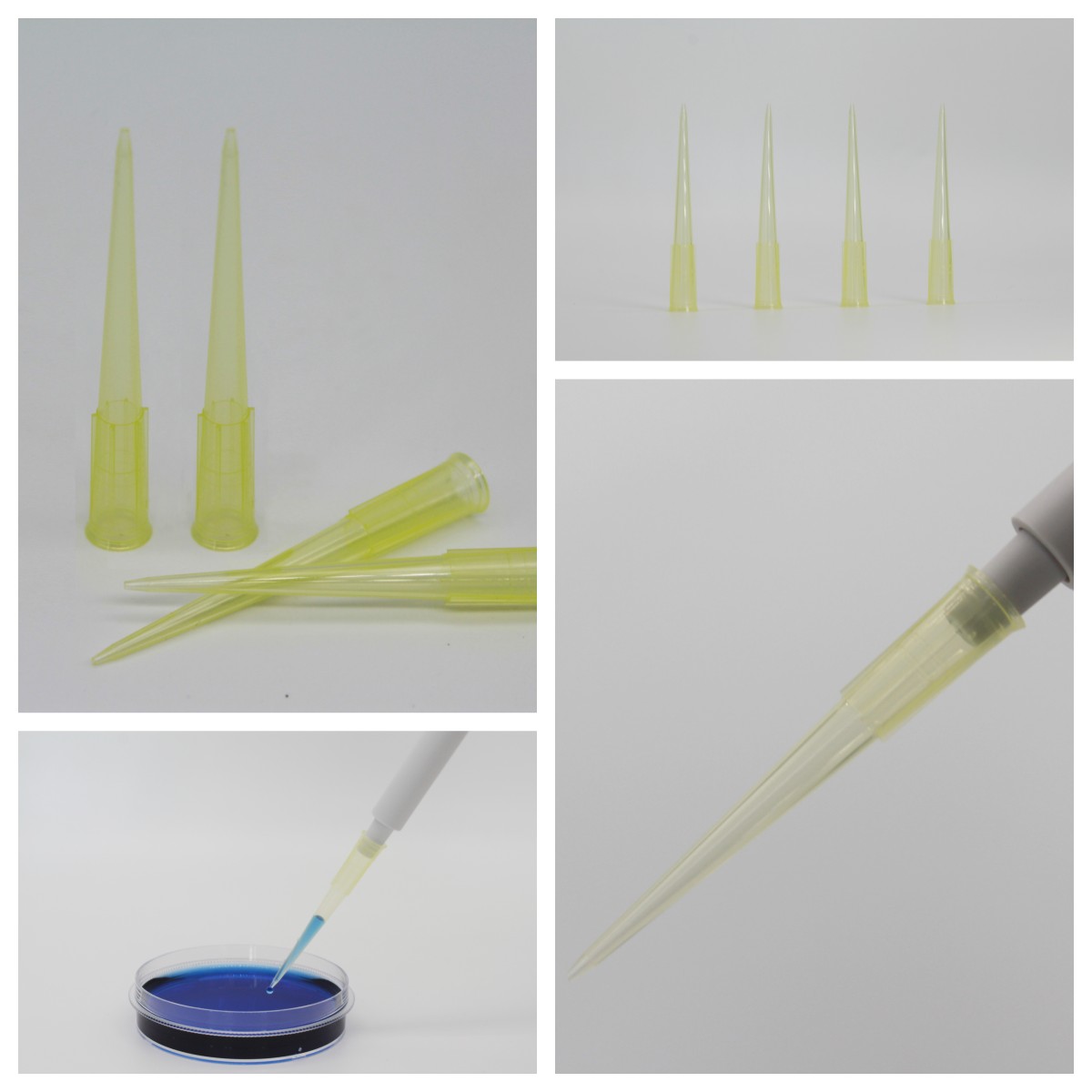
Boxed, 200 μl pipette tip
Packaging format: 96 units per pre-packed tray; the standard specification is 10 trays per box. Upon dispatch, pipette tip are neatly arranged on standard ANSI/SBS-compliant pipette tip pallets, eliminating the need for manual packing into boxes.
Advantages: Most models are shipped ready-to-use (sterile), with DNase/RNase-free certification; they can be used immediately upon opening, thereby avoiding the risk of contamination associated with manual packing, and are compatible with automated pipetting workstations for direct handling.
Drawbacks: Higher overall purchase cost; the total capacity per box is significantly lower than that of the bulk-packaged versions; and restocking is required more frequently in high-use scenarios.
Suitable applications: qPCR, gene sequencing, cell culture, low-abundance nucleic acid extraction and other precision experiments requiring sterile-grade standards, as well as scenarios requiring standardised pre-loaded plates, such as automated workstations and high-throughput drug screening.
Selection Guide
| Selection Criteria | Packaged in 200 μl sachets pipette tip | Boxed, 200 μl pipette tip |
| sterile Safeguards | High voltage must be applied manually sterilized; this may introduce contamination | Pre-treated at the factory sterilized, free from DNase and RNase, with an extremely low risk of contamination |
| Operational efficiency | This requires manual packing, which is time-consuming and labour-intensive | Ready to use straight out of the box; compatible with automated equipment; highly efficient |
| Suitable scenarios | Preparation of standard reagents, crude specimen processing, teaching experiments | qPCR, cell culture, sequencing and automated workstation experiments |
| Single-pack capacity | 1,000–25,000 units per bag; low restocking frequency | 960 sticks per box; frequent restocking is required for high-frequency use |
Tips for avoiding pitfalls when selecting a model
If a laboratory’s average daily consumption of pipette tip exceeds 500 units, and its work primarily involves routine preliminary processing, the bulk-packaged option should be prioritised, as this can significantly reduce the cost of purchasing consumables.
For precision experiments involving precious specimen and trace analysis, bagged pipette tip that has not been sterilized must under no circumstances be used; it is essential to procure factory-sealed sterilized, to avoid experimental results being invalidated by external nucleic acid contamination.
When used with an automated pipetting workstation, it is essential to use standard ANSI/SBS-compliant pipette tip boxes; pipette tip bags are not directly compatible with the equipment trays and may result in pipetting misalignment, needle jams and other faults.
Note: The information on the scientific research products above is for reference only!
Related BUNSEN products
- PCR Plates & PCR Tubes
- Pipette Tips
- Cell Culture Dishes & Plates
- Product Center — all BUNSEN lab consumables & instruments
Browse the full product range, or request a sample or quotation.
Leave a Reply