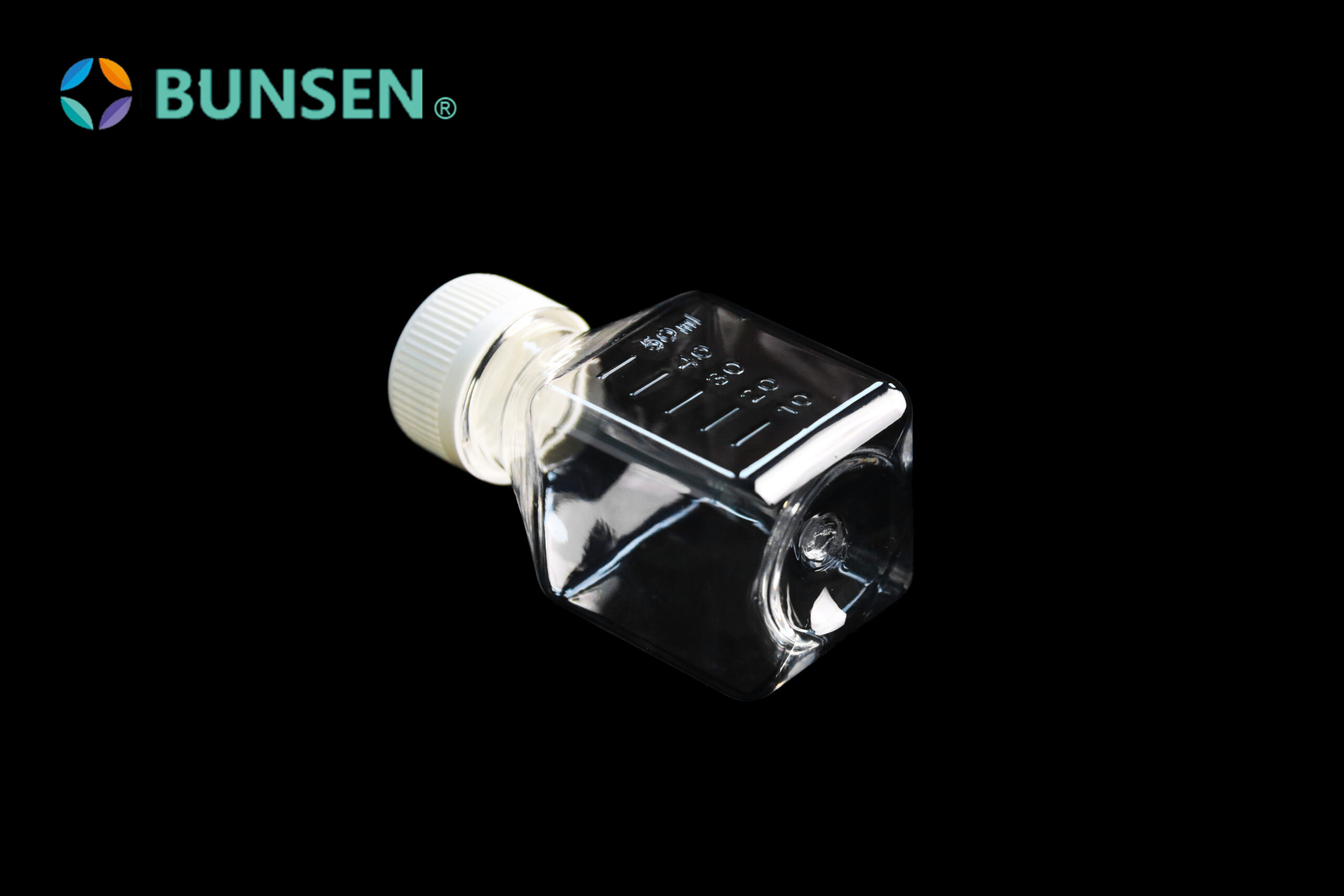
PETG square reagent bottle
Feature 1: High transparency
PETG is a highly transparent plastic with a translucent ice-blue undertone that is in line with global trends, and its surface is exceptionally smooth. It boasts excellent optical properties, a high-gloss surface and low turbidity; its light transmittance is close to 90 per cent, which is very similar to that of acrylic (PMMA) and superior to that of polycarbonate (PC).
Feature 2: High impact resistance
Feature 3: An environmentally friendly material that withstands low temperatures
The physical and mechanical properties of PETG remain virtually unchanged at low temperatures, and it is one of the few environmentally friendly plastic materials available to date. It is considered an environmentally friendly material because, when burnt, it produces only CO₂ and water, thereby helping to protect the natural environment; furthermore, containers made from it are non-cytotoxic and pyrogen-free.
Feature 4: Top-of-the-range straw model
Highly adaptable transfer caps, standard Luer connectors and TPE thermoplastic tubing, all produced using single-piece injection moulding, provide sterile transfer solutions for the pharmaceutical, biotechnology and laboratory sectors, enabling the sealed transfer of liquids.
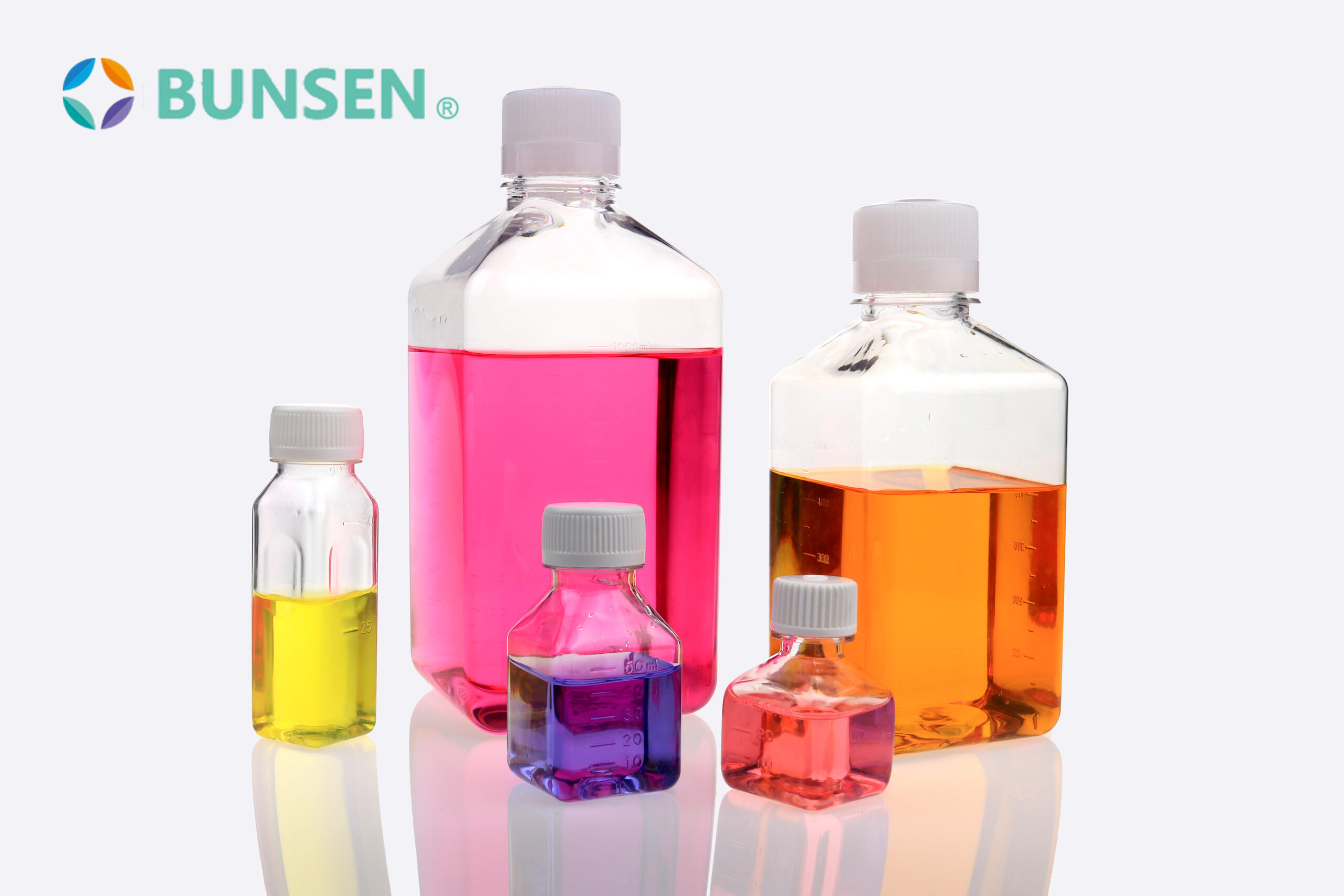
PET square reagent bottle
In fact, PETG is a type of PET; both are classified as ‘No. 1’ in the plastic classification system. Compared with PET, PETG simply replaces the hydroxyl group on the ethylene glycol chain with CHDM.

Consequently, both share very similar material advantages:
1. It has excellent mechanical properties, with an impact strength 3 to 5 times that of other films, and good resistance to creasing.
2. Resistant to oils, fats, dilute acids, dilute alkalis and most solvents.
3. It can be used within a temperature range of 55–60 °C; it can withstand temperatures of up to 65 °C for short periods and temperatures as low as –70 °C, and its mechanical properties are only minimally affected by high or low temperatures.
4. It has low permeability to gases and water vapour, whilst offering excellent resistance to gas, water, oil and odours.
5. It is highly transparent, blocks UV rays and has a good gloss.
6. As the most affordable engineering plastic, PET offers excellent value for money.
So what are the characteristics of HDPE reagent bottle?
HDPE stands for high-density polyethylene
1. As the polymerisation of ethylene is catalysed, very few branches are formed, resulting in a highly robust and dense structure that enables it to be used at 105 °C.
2. High-density polyethylene resin is milky white in colour and has poor transparency.
3. High-density polyethylene resin has good stiffness, tensile strength, mechanical strength and heat resistance; however, products made from it may only be used at temperatures not exceeding 80 °C.
4. High-density polyethylene products also offer good electrical insulation, toughness and cold resistance, and can withstand low temperatures of down to –80 °C in cold storage.
5. It has extremely low water absorption (no more than 0.03 per cent) and good chemical stability.
Note: The product information above is for reference only!
BUNSEN An explanation of: PET, PETG and HDPE reagent bottle ? BUNSEN The company’s product range now exceeds 10,000 items and is widely used in research institutions, central laboratories, molecular biology and other scientific fields. The company’s extensive product range not only meets the specific requirements of R&D clients regarding product variety and packaging, but also caters to the comprehensive needs of manufacturing enterprises at every stage, from small-scale and pilot-scale trials through to large-scale production.
Note: The information on the scientific research products above is for reference only!
Related BUNSEN products
Browse the full product range, or request a sample or quotation.
Leave a Reply