This guide to selecting cryopreservation boxes will present practical comparisons based on two key criteria—cost and low-temperature resistance—to help you identify the best value-for-money solutions for different specimen scenarios.
Cost over the full cycle, not per unit
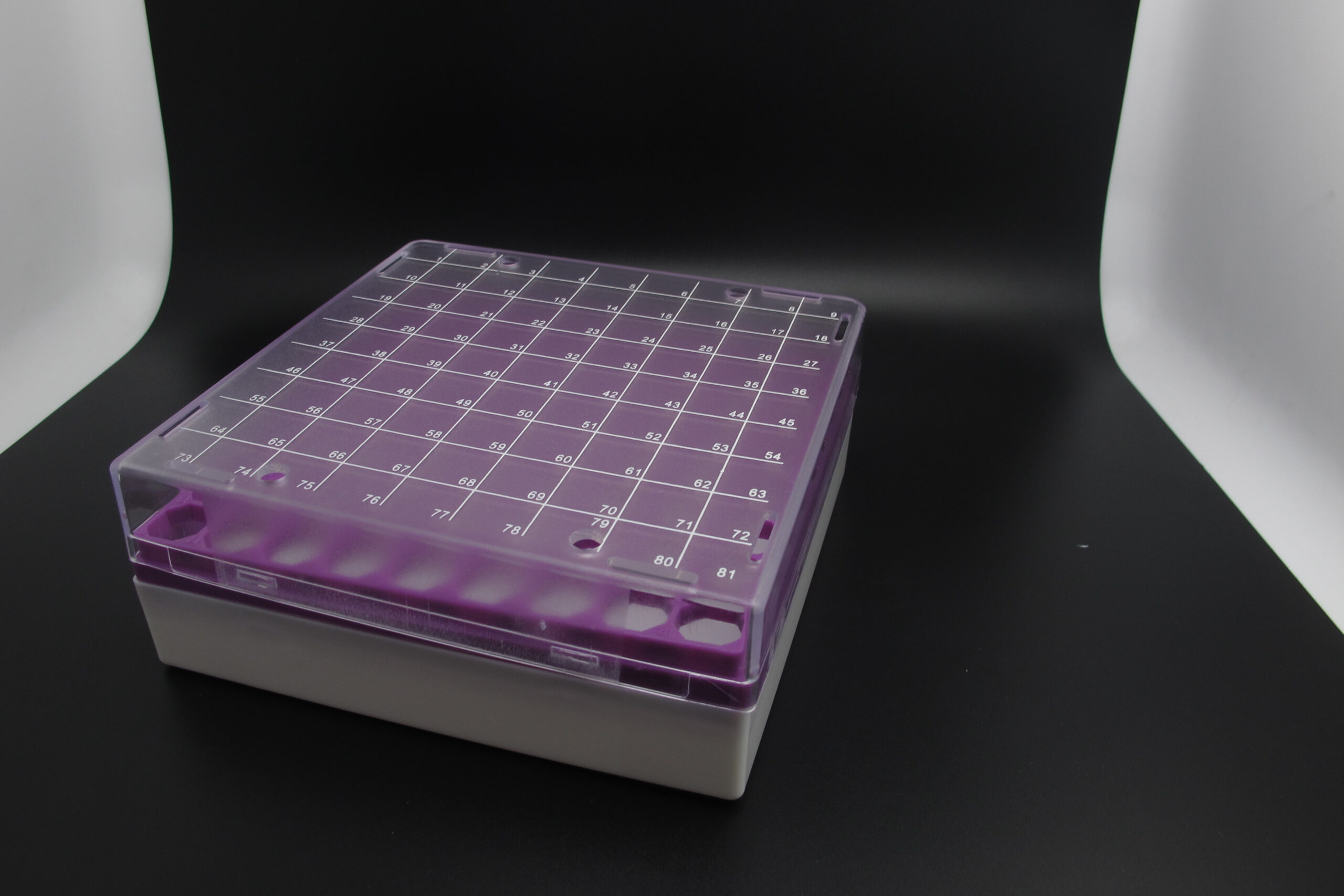
There are significant differences in the procurement costs and long-term running costs of the two types of cryopreservation boxes, which directly determine the efficiency of laboratory consumables budget allocation:
Long-term running costs: Paper cryopreservation boxes are single-use consumables; once they become damp or the laminate is damaged, they are immediately discarded, incurring no subsequent maintenance costs; PP/PC plastic cryopreservation boxes can withstand high-pressure sterilisation at 121°C sterilized.
Associated hidden costs: Paper boxes are 60 per cent lighter than plastic boxes and require no additional reinforcement or protection; they can be placed directly on ultra-low temperature freezer shelves without occupying dedicated cryopreservation racks; plastic boxes are compatible with the full range of standard cryopreservation racks and are compatible with automated specimen access equipment, eliminating the need for additional modifications to the storage system.
Performance at −80 °C and in liquid nitrogen
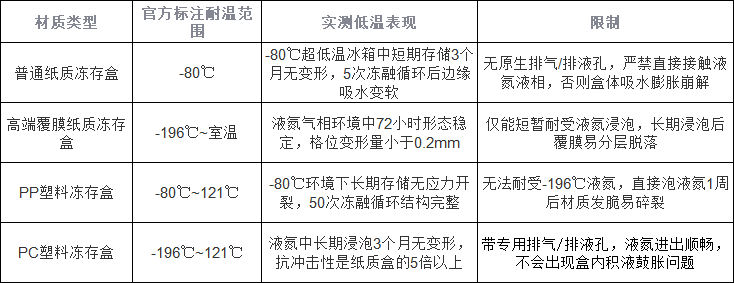
The low-temperature tolerance limits of cryopreservation boxes made from different materials vary considerably; choosing the wrong one will result directly in specimen being scrapped:
Choosing by scenario
Taking into account both cost and low-temperature performance, the selection options for different specimen scenarios are as follows:
Prioritise paper-based cryopreservation boxes: suitable for standard clinical testing specimen, experimental control groups specimen and other low-value batches specimen, such as standard clinical testing specimen and experimental control groups specimen, for dry short-term storage at –80°C ultra-low temperature freezer (for up to three months) where frequent removal and replacement are not required; this can significantly reduce consumables procurement costs.
PP plastic cryopreservation boxes are the preferred choice: suitable for routine cell cryopreservation and long-term storage at –80°C, they are ideal for most standard laboratories. They can be repeatedly autoclaved sterilized and offer good value for money.
PC plastic cryopreservation boxes must be selected: suitable for the precious ‘seeds’ of cell banks and gene banks specimen, as well as active specimen requiring long-term storage in liquid nitrogen, high-value specimen subject to frequent and repeated retrieval and storage, and to mitigate the risk of specimen loss caused by container rupture at low temperatures.
Ordering mistakes
Do not be misled by claims that standard paper cryopreservation boxes ‘can be immersed directly in liquid nitrogen’; even perforated, laminated versions can only withstand the gaseous phase of liquid nitrogen for a short time, and direct contact with liquid nitrogen is strictly prohibited.
When purchasing plastic cryopreservation boxes, do not be tempted solely by low prices; boxes made from low-cost recycled PP will become brittle and crack after just one month at -80°C. It is essential to choose compliant products made from brand-new, medical-grade raw materials.
The 81-well (9×9) configuration of both types of cryopreservation trays is ergonomically designed to optimise tube retrieval; it offers a high margin for error when picking up tubes with the fingers. This configuration is the preferred choice for manual operations to avoid accidentally touching neighbouring tubes when retrieving tubes manually from 100-well trays specimen.
Related reading
Note: The information on the scientific research products above is for reference only!
Related BUNSEN products
Browse the full product range, or request a sample or quotation.
Leave a Reply