Product Features
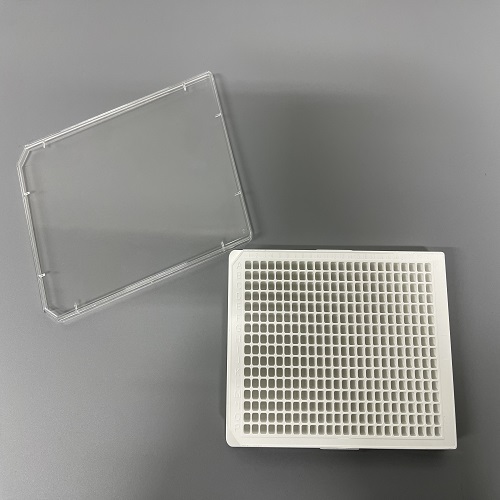
The 96-well U-bottom low-binding culture plate is a specialised consumable designed specifically for 3D cell suspension culture. The well bottom features a covalently modified, electrically neutral, inert hydrogel coating that inhibits cell adhesion, whilst protein non-specific binding. Combined with the converging geometry of the U-shaped round bottom, this enables cells to aggregate spontaneously without external intervention, forming 3D cell spheroids of highly uniform morphology. This avoids the issues of cell adhesion and spreading, as well as uneven spheroid sizes, commonly encountered in traditional flat-bottomed culture plate plates.
Application scenarios
1. 3D cell spheroids
The converging properties of the U-shaped bottom allow cells to settle naturally and aggregate at the centre of the well base; without the need for special coating or droplet formation techniques, tumour cell spheroids of uniform size can be produced in bulk, simulating the three-dimensional microenvironment of solid tumours in vivo.
2. Stem Cell and Blastomere Culture
Super low-binding blocks the spontaneous differentiation signals triggered during the adhesion of stem cells, thereby maintaining their pluripotent state, it can efficiently induce embryonic stem cells and iPS cells to aggregate and form morphologically uniform blastocyst-like structures, significantly enhancing the success rate and uniformity of blastocyst-like formation, thereby providing stable starting material for subsequent directed stem cell differentiation experiments.
3. Long-term culture of organoids
Designed to meet the suspension culture requirements of a wide range of organoids, low-binding the coating does not bind non-specifically to the organoid’s extracellular matrix, whilst the spatial structure of the U-shaped base prevents deformation of the organoids upon attachment, supporting their long-term, stable growth within the wells. Furthermore, as frequent passaging and transfer are not required, this significantly reduces the specimen risk of damage during the procedure.
4. High-throughput drug screening
The 96-well layout, compliant with the ANSI/SBS standard, can be directly integrated with automated pipetting workstations, high-throughput enzyme analysers and high-content imaging systems, enabling an integrated ‘culture–dosing–assay’ workflow. There is no need to transfer cell spheroids, thereby avoiding mechanical damage caused by spheroid transfer and ensuring that experimental reproducibility is significantly higher than that of traditional methods.
5. Immune cell function assays
Designed for the suspension co-culture of immune cells, the low-binding surface does not trigger non-specific adhesion and activation signals in immune cells, whilst the U-bottom clustering effect enables efficient contact between immune cells and target cells; data stability is significantly superior to that of conventional suspension culture plate systems.
Key Points to Note When Using
The entire process of opening the lid must be carried out inside a cleanbench to avoid contact with the coating on the bottom of the wells and to prevent damage to the performance of the low-binding, which could lead to unintended cell adhesion.
When dispensing the sample, ensure that the pipette tip does not come into direct contact with the bottom of the well, to prevent scratching the hydrogel coating, which could affect subsequent cell spheroid formation.
When changing the culture medium during cultivation, proceed gently, using the ‘half-volume’ method to avoid directly aspirating the cell clusters from the bottom of the well, thereby ensuring that the clusters remain intact and do not disperse.
If fluorescence imaging is required, the black-background, transparent version may be selected directly; this not only eliminates fluorescence crosstalk between wells but is also compatible with direct observation under an inverted microscope, eliminating the need for transfer specimen.
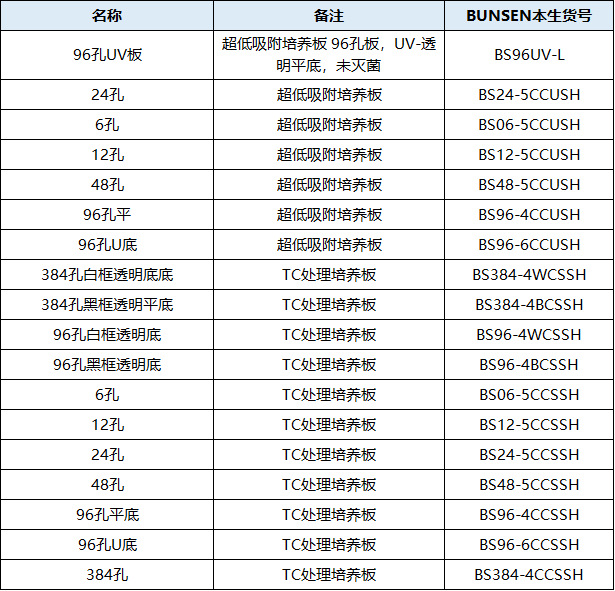
Note: The information on the scientific research products above is for reference only!
Related BUNSEN products
- PCR Plates & PCR Tubes
- Pipette Tips
- Cell Culture Dishes & Plates
- Product Center — all BUNSEN lab consumables & instruments
Browse the full product range, or request a sample or quotation.
Leave a Reply