Tag: 待审

  • Centrifuge Tube Plastics Compared: PP, PS, PET and PC

    Specifications

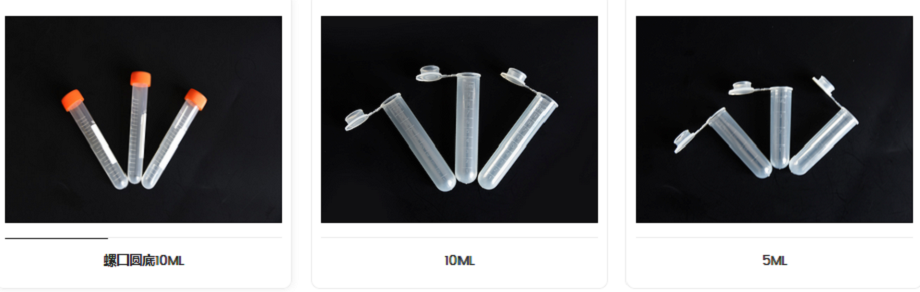
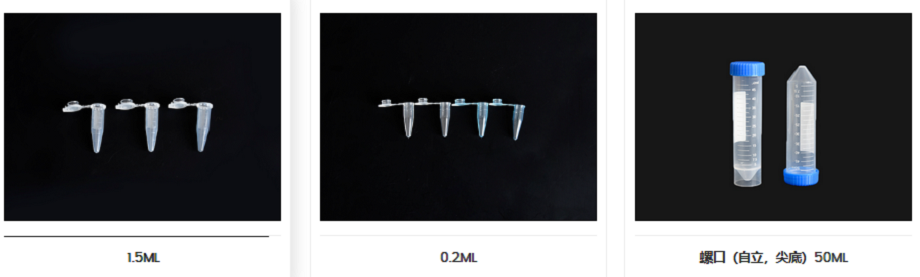
    This series of scientific-grade, graduated plastic centrifuge tube tubes are all made from medical-grade polypropylene (PP). The tubes are transparent and clear, with precisely printed graduations that are resistant to fading. They have a temperature resistance range of –80 °C to 121 °C and are suitable for a variety of experimental scenarios, including high-temperature, high-pressure sterilized and cryopreservation, making them essential general-purpose consumables for molecular biology and biochemistry experiments.

    1.5 ml/2 ml micro-volume version: features a pointed-bottom design with an integrated cap, compatible with standard micro-volume centrifugation rotor, suitable for applications such as extraction, micro-volume specimen and aliquot, and temporary storage of ELISA reagents

    15ml version: Screw-cap design with a pointed base, capable of withstanding forces of up to 12,000g centrifugation; the tube features clear graduations and a labelling area, is compatible with high-capacity centrifugation centrifuge rotors, and is suitable for medium-volume specimen centrifugation precipitates

    50ml version: Available with either a screw cap and pointed base or a flat base that stands upright; withstands forces of up to 9,500g centrifugation; the tube can be graduated up to 60ml, making it suitable for large-volume specimen enrichment, reagent preparation and cell suspensions centrifugation and similar applications

    The tube range at a glance
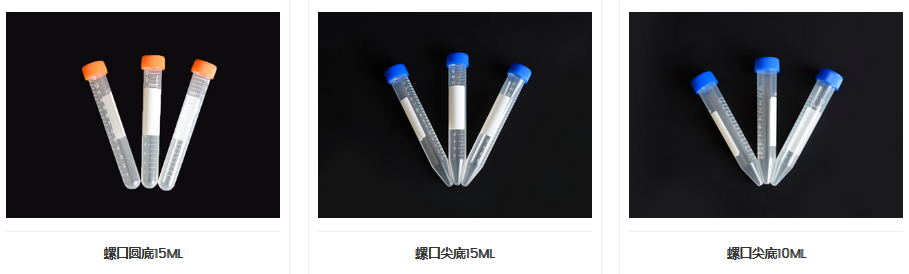
    Plastics for Scientific Research centrifuge tube 1.5ml/2ml/15ml/50ml, graduated
    Plastics for Scientific Research centrifuge tube 1.5ml/2ml/15ml/50ml, graduated
    Plastics for Scientific Research centrifuge tube 1.5ml/2ml/15ml/50ml, graduated

    Where PP wins

    Safe and clean: The product has undergone electron beam sterilized treatment, strictly ensuring DNase-free, RNase-free and endotoxin-free contamination, and meeting the experimental requirements for sensitivity levels ranging from nucleic acid, protein and other sensitive specimen experimental requirements.

    Leak-proof seal: tube cap Features a double-threaded/spiral-grooved seal design, ensuring no liquid leakage during high-speed centrifugation or inverted operation, thereby preventing specimen cross-contamination and aerosol dispersion

    Corrosion-resistant and durable: Made from high-quality PP material, these tubes are resistant to acids and alkalis and are compatible with the vast majority of standard chemical reagents. The tube walls are of uniform thickness, ensuring they are unlikely to become brittle or deform during long-term storage at low temperatures.

    Compliance Certifications: All the brand’s products are certified to ISO 9001, ISO 13485 and the EU CE mark; some models also carry FDA food-contact certification, ensuring compliance for research applications.

    Practical cautions

    When filling with liquid, leave at least 10 per cent of the tube’s capacity free to prevent the liquid from spilling over at high speeds centrifugation, which could cause the rotor to become unbalanced.

    centrifugation Ensure the machine is carefully balanced beforehand; microcentrifuge tube the balancing error must be kept within 0.1 g to prevent centrifugation operational faults.

    Standard (non-cryopreservation grade) centrifuge tube Must not be placed directly at –80°C ultra-low temperature freezer for long-term storage, to prevent the tube from becoming brittle and leaking

    Give preference to the electron beam sterilized model to avoid issues such as tube deformation and blurred markings caused by high-pressure steam sterilized.

    Note: The product information above is for reference only!

    BUNSEN BUNSEN offers a product range of over 10,000 items, which are widely used in research institutions, central laboratories and the field of molecular biology. The company’s extensive product range is capable of meeting the specific requirements of R&D clients regarding product variety and packaging, whilst also fulfilling the comprehensive needs of manufacturing enterprises at every stage, from small-scale and pilot-scale trials through to large-scale production.


    Note: The information on the scientific research products above is for reference only!
  • ELISA Kit FAQ: The Questions Researchers Ask Most

    Troubleshooting ELISA experiments hinges on controlling variables. Most ‘failures’ stem from variations in operational details. The following is a summary of common causes and solutions organised by problem type, to help you pinpoint the issue quickly.

    The standard curve is poor (R² below 0.99)

    Standard curves form the basis of quantitative analysis; problems usually arise due to inaccurate gradients or uneven reactions.

    standard Dilution error: Insufficient dissolution or failure to mix thoroughly during ratio dilution. It is recommended to allow the solution to stand briefly centrifugation after dissolution, to use a new tip at each step, and to vortex thoroughly.

    Inaccurate dispensing: pipette Not calibrated, or inconsistent dispensing speed or angle. Ensure regular calibration and maintain a vertical, steady motion when dispensing.

    Fluctuations in incubation conditions: Failure to seal the plate may result in edge effects or temperature inconsistencies. Be sure to use sealing film and place it in a constant-temperature incubator (37°C ± 0.5°C).

    Background too high (high blank OD)

    A high background level narrows the detection range, making it difficult to interpret weak positive results specimen.

    Incomplete cleaning: This is the most common cause. Ensure that each well is filled with cleaning solution, soak for 30 seconds to 2 minutes, pat dry, and repeat 3–5 times.

    Inadequate blocking: The blocking agent has failed to cover all non-specific binding sites. It is recommended to extend the blocking time (≥1 hour) or optimise the blocking solution (e.g. containing 5% skimmed milk powder + 0.1% Tween-20).

    Excessive colour development time: the substrate has reacted for too long. Control the reaction time; once the peak on the standard curve has developed fully, stop the reaction immediately.

    Sensitivity too low (weak signal, low OD)

    If the target substance is present but cannot be detected, this is usually due to a loss of activity or an insufficient reaction.

    Reagent inactivation or omission: enzyme Standard antibody or substrate repeatedly freeze-thaw failing, or omitted during the procedure. Reagents must be used by batch aliquot to avoid repeated use freeze-thaw, and the substrate must be strictly protected from light.

    specimen Degradation or the presence of inhibitors: specimen Repeated freeze-thaw leads to antigen degradation, or the presence of NaN₃ inhibits HRP enzyme activity. specimen Should aliquot be stored at –80 °C; the use of specimen or reagents containing NaN₃ is strictly prohibited.

    Insufficient incubation: the incubation period was too short or the temperature was too low. You may try extending the incubation time (e.g. overnight at 4 °C) or checking the temperature of the incubator.

    Poor reproducibility (CV above 15 %)

    Variations in sample addition: Uneven addition rate or pipette tip loose fittings. It is recommended to use a calibrated pipette and to add samples from the same batch of specimen simultaneously to minimise time differences between wells.

    Inconsistent force when washing and drying: the force applied when drying by hand may be too strong or too light. The item should be patted dry vertically with moderate force to prevent the composite material from falling off or residue.

    Edge effect: Evaporation occurs more rapidly at the outer holes. Give priority to the central holes, or use sealing film sealing throughout.

    Details that decide whether the plate works

    Beware of the ‘hook effect’: When the concentration of specimen is too high, it may actually lead to signal suppression (false negatives). If the result is abnormally low but the expected value is high, dilute specimen and retest.

    specimen Contraindications: haemolysis specimen (haem protein with peroxide-like enzyme activity), hyperlipidaemia specimen and samples containing NaN₃ specimen will all seriously interfere with the results.

    Consumables management: Any unused items (microplate) must be sealed with a desiccant to prevent moisture ingress; if crystals form in the concentrated washing solution, dissolve them in a 37°C water bath before use.


    Note: The information on the scientific research products above is for reference only!
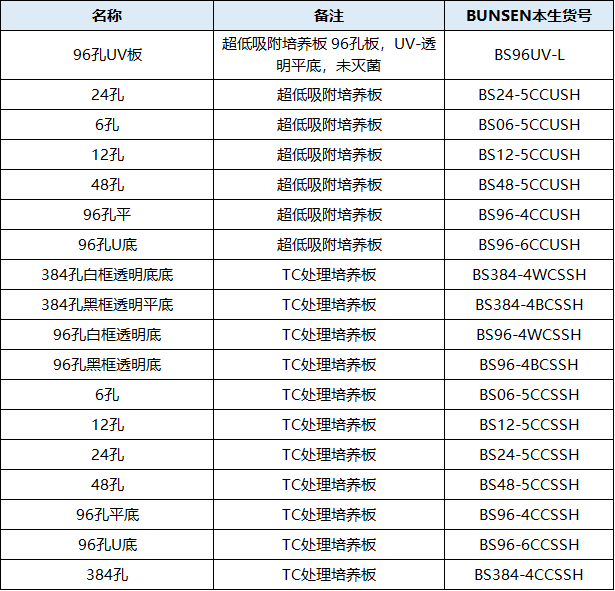
  • Low-Binding 96-Well U-Bottom Plates: What They Are Used For

    What low-binding actually changes

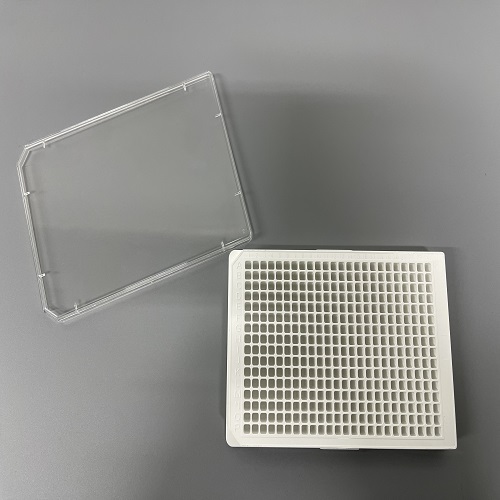
    The 96-well U-bottom low-binding culture plate is a specialised consumable designed specifically for 3D cell suspension culture. The well bottom features a covalently modified, electrically neutral, inert hydrogel coating that inhibits cell adhesion, whilst protein non-specific binding. Combined with the converging geometry of the U-shaped round bottom, this enables cells to aggregate spontaneously without external intervention, forming 3D cell spheroids of highly uniform morphology. This avoids the issues of cell adhesion and spreading, as well as uneven spheroid sizes, commonly encountered in traditional flat-bottomed culture plate plates.

    Where U-bottom low-binding plates earn their price

    3D cell spheroids

    The converging properties of the U-shaped bottom allow cells to settle naturally and aggregate at the centre of the well base; without the need for special coating or droplet formation techniques, tumour cell spheroids of uniform size can be produced in bulk, simulating the three-dimensional microenvironment of solid tumours in vivo.

    Stem cell and blastomere culture

    Super low-binding blocks the spontaneous differentiation signals triggered during the adhesion of stem cells, thereby maintaining their pluripotent state, it can efficiently induce embryonic stem cells and iPS cells to aggregate and form morphologically uniform blastocyst-like structures, significantly enhancing the success rate and uniformity of blastocyst-like formation, thereby providing stable starting material for subsequent directed stem cell differentiation experiments.

    Applications of 96-well U-bottom plates low-binding culture plate

    Long-term organoid culture

    Designed to meet the suspension culture requirements of a wide range of organoids, low-binding the coating does not bind non-specifically to the organoid’s extracellular matrix, whilst the spatial structure of the U-shaped base prevents deformation of the organoids upon attachment, supporting their long-term, stable growth within the wells. Furthermore, as frequent passaging and transfer are not required, this significantly reduces the specimen risk of damage during the procedure.

    High-throughput drug screening

    The 96-well layout, compliant with the ANSI/SBS standard, can be directly integrated with automated pipetting workstations, high-throughput enzyme analysers and high-content imaging systems, enabling an integrated ‘culture–dosing–assay’ workflow. There is no need to transfer cell spheroids, thereby avoiding mechanical damage caused by spheroid transfer and ensuring that experimental reproducibility is significantly higher than that of traditional methods.

    Immune cell function assays

    Designed for the suspension co-culture of immune cells, the low-binding surface does not trigger non-specific adhesion and activation signals in immune cells, whilst the U-bottom clustering effect enables efficient contact between immune cells and target cells; data stability is significantly superior to that of conventional suspension culture plate systems.

    Practical cautions

    The entire process of opening the lid must be carried out inside a cleanbench to avoid contact with the coating on the bottom of the wells and to prevent damage to the performance of the low-binding, which could lead to unintended cell adhesion.

    When dispensing the sample, ensure that the pipette tip does not come into direct contact with the bottom of the well, to prevent scratching the hydrogel coating, which could affect subsequent cell spheroid formation.

    When changing the culture medium during cultivation, proceed gently, using the ‘half-volume’ method to avoid directly aspirating the cell clusters from the bottom of the well, thereby ensuring that the clusters remain intact and do not disperse.

    If fluorescence imaging is required, the black-background, transparent version may be selected directly; this not only eliminates fluorescence crosstalk between wells but is also compatible with direct observation under an inverted microscope, eliminating the need for transfer specimen.

    Applications of 96-well U-bottom plates low-binding culture plate

    Note: The information on the scientific research products above is for reference only!
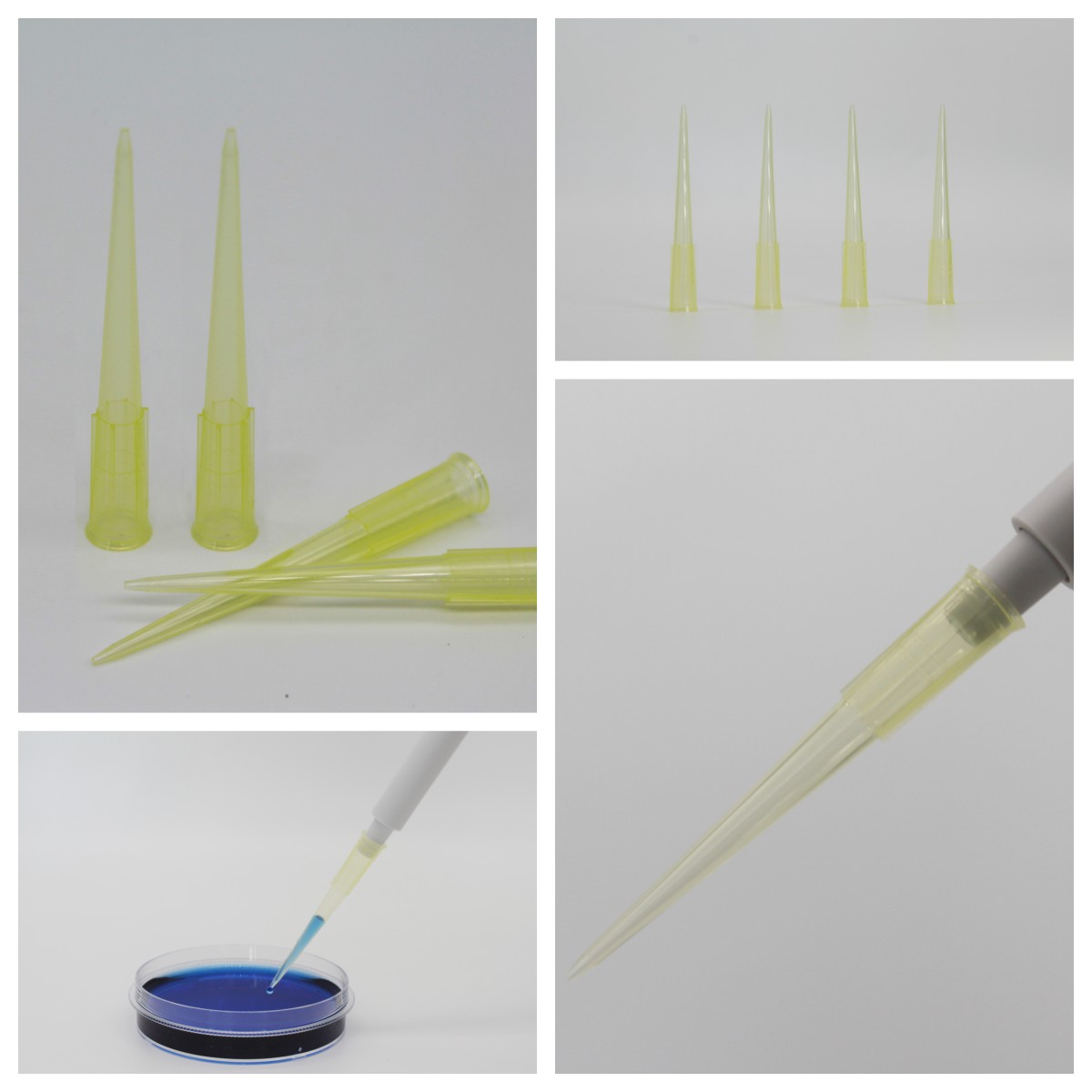
  • 200 uL Pipette Tips: Pouch vs Box Packaging and How to Choose

    Where the two formats differ in use

    The differences between the 200 μl pouch and boxed formats pipette tip lie primarily in three aspects: ease of use, cost, and sterile safety levels. They are suited to different experimental scenarios; there is no absolute superiority or inferiority between them, and the choice should simply be based on the specific requirements of the experiment.

    Pouch (bulk bag) packaging

    Packaging format: The standard specification is 1,000 sticks per bag, whilst the bulk packaging option can hold up to 25,000 sticks per bag. pipette tip No pre-packaged trays; all items are stored together in a sealed PE bag.

    Advantages: Extremely low cost per stick; suitable for high-throughput routine experiments involving a daily consumption of over a thousand sticks.

    Drawback: Before use, you must manually load pipette tip must be loaded individually into the pipette tip box before use, which is time-consuming and labour-intensive; moreover, external contamination is easily introduced during the packing process, and the sterile model requires additional high-pressure sterilized treatment.

    Suitable applications: Routine preparation of standard molecular biology reagents, bulk processing of specimen, teaching experiments, routine pipetting practice and other applications where sterile-grade requirements are not stringent but consumption is high.

    Differences in Applications and a Selection Guide for 200 μl Pouch and Box Packages pipette tip

    Racked, boxed tips

    Packaging format: 96 units per pre-packed tray; the standard specification is 10 trays per box. Upon dispatch, pipette tip are neatly arranged on standard ANSI/SBS-compliant pipette tip pallets, eliminating the need for manual packing into boxes.

    Advantages: Most models are shipped ready-to-use (sterile), with DNase/RNase-free certification; they can be used immediately upon opening, thereby avoiding the risk of contamination associated with manual packing, and are compatible with automated pipetting workstations for direct handling.

    Drawbacks: Higher overall purchase cost; the total capacity per box is significantly lower than that of the bulk-packaged versions; and restocking is required more frequently in high-use scenarios.

    Suitable applications: qPCR, gene sequencing, cell culture, low-abundance nucleic acid extraction and other precision experiments requiring sterile-grade standards, as well as scenarios requiring standardised pre-loaded plates, such as automated workstations and high-throughput drug screening.

    How to choose

    Selection CriteriaPackaged in 200 μl sachets pipette tipBoxed, 200 μl pipette tip
    sterile SafeguardsHigh voltage must be applied manually sterilized; this may introduce contaminationPre-treated at the factory sterilized, free from DNase and RNase, with an extremely low risk of contamination
    Operational efficiencyThis requires manual packing, which is time-consuming and labour-intensiveReady to use straight out of the box; compatible with automated equipment; highly efficient
    Suitable scenariosPreparation of standard reagents, crude specimen processing, teaching experimentsqPCR, cell culture, sequencing and automated workstation experiments
    Single-pack capacity1,000–25,000 units per bag; low restocking frequency960 sticks per box; frequent restocking is required for high-frequency use

    Common mistakes when ordering

    If a laboratory’s average daily consumption of pipette tip exceeds 500 units, and its work primarily involves routine preliminary processing, the bulk-packaged option should be prioritised, as this can significantly reduce the cost of purchasing consumables.

    For precision experiments involving precious specimen and trace analysis, bagged pipette tip that has not been sterilized must under no circumstances be used; it is essential to procure factory-sealed sterilized, to avoid experimental results being invalidated by external nucleic acid contamination.

    When used with an automated pipetting workstation, it is essential to use standard ANSI/SBS-compliant pipette tip boxes; pipette tip bags are not directly compatible with the equipment trays and may result in pipetting misalignment, needle jams and other faults.


    Note: The information on the scientific research products above is for reference only!